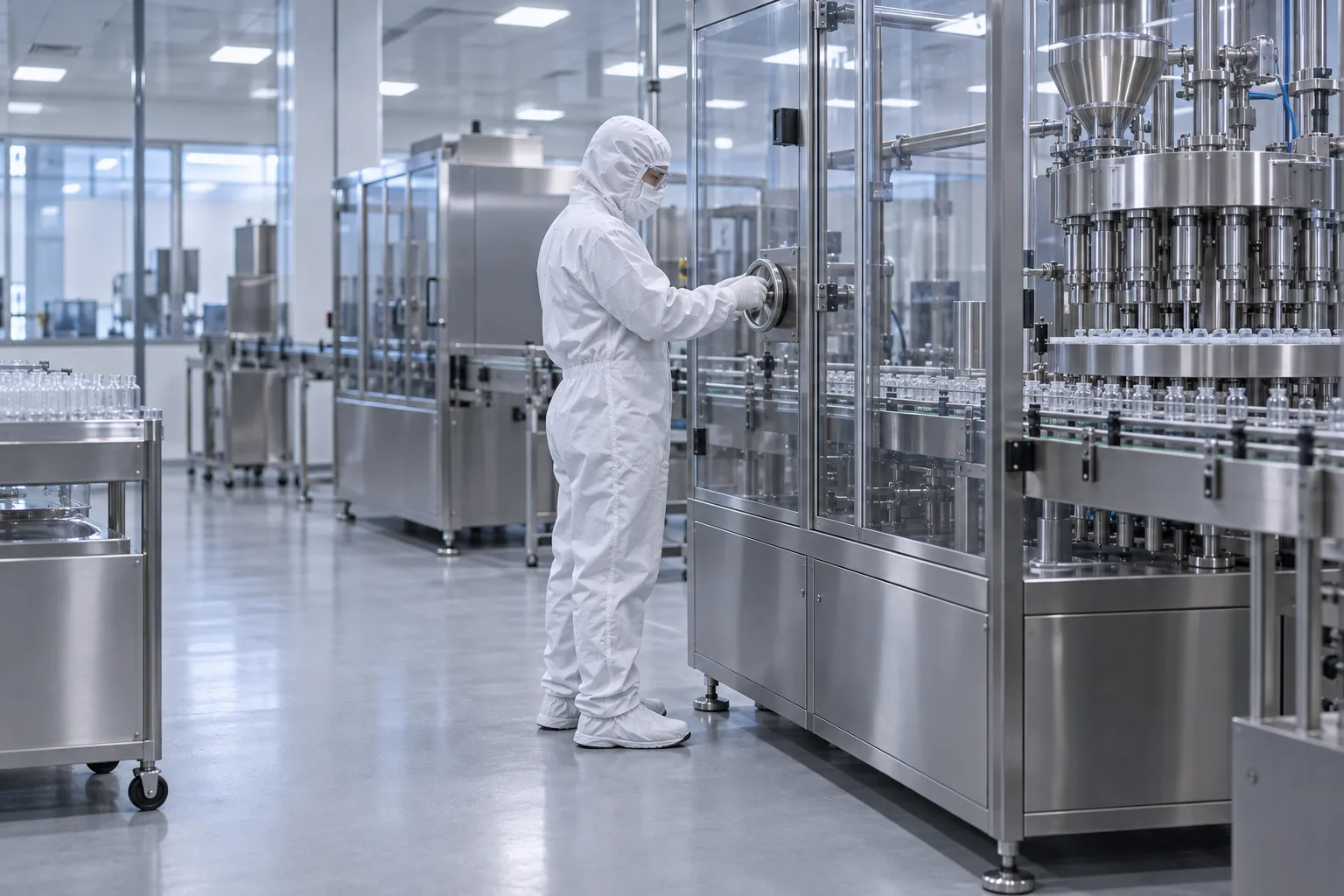
Good Manufacturing Practice — GMP, or cGMP when people mean the “current” expectations regulators enforce — is the baseline set of practices that keep food, pharmaceuticals, and supplements safe to make. Running the equipment is only half of it. GMP also assumes the people doing the work are trained: trained to keep themselves and the product clean, and trained in the specific job in front of them. This guide breaks down what GMP training actually has to cover, when people need to be retrained, and how to keep the records that prove all of it.
TrainGrid tracks retraining intervals and certificate expiry per employee, sending automatic reminders ahead of the due date so a GMP refresher doesn't quietly lapse.
- GMP expects personnel to be trained in hygiene and personal practices, and in the specific duties of their role.
- Training happens before someone works unsupervised, and is repeated when procedures, products, or roles change.
- Role duties are usually tied to standard operating procedures, so SOP changes trigger retraining.
- The audit risk is rarely the training itself — it's incomplete records and refreshers that quietly lapse.
- Requirements vary by product type and jurisdiction; always work from the current GMP regulation or standard that applies to you.
What GMP means for training
GMP is a framework rather than a single course. In the United States the FDA enforces current Good Manufacturing Practice for food, drugs, and dietary supplements, and comparable GMP expectations exist across other jurisdictions and product types. What they share is a simple principle: the people who make a product must be competent to make it safely, and you should be able to demonstrate that they are. That turns “train your staff” into three concrete obligations — hygiene and personal practices, role-specific duties, and documentation — that hold up whether you make deli meats or tablets.
1. Hygiene and personal practices
Every GMP program starts with personal hygiene, because a well-run process can still be undone by contamination a person carries in. Hygiene training is the layer that applies to nearly everyone who enters a production area — not just line staff, but maintenance, quality, and often visitors and contractors at a basic level. Typical content includes:
- Handwashing and personal cleanliness — when and how to wash, and the practices that prevent product contamination.
- Gowning, hair and beard covers, and protective clothing appropriate to the area.
- Health and illness reporting — knowing when not to work with product, and how to report it.
- Behaviors in production areas — jewelry, eating and drinking, and how movement between zones is controlled.
- Foreign-material and cross-contamination awareness, including allergen handling where it applies.
None of this is exotic, and that is exactly why it slips. Hygiene rules feel like common sense until a new hire arrives who has never heard them, or a practice drifts over a year and no one refreshes it. Treating hygiene as trained-and-recorded rather than assumed is what separates a GMP culture from a set of posters on the wall.
2. Role and SOP-specific duties
Hygiene is the floor; competence in the actual job is the substance. GMP expects that people are trained in the specific duties of their role before they perform them unsupervised. In practice those duties are written down as standard operating procedures, so role-specific training and SOP training are usually the same activity: you train someone on the SOPs that govern their tasks and record that they were trained.
Role-specific training commonly covers:
- The SOPs and work instructions for the tasks that person performs.
- Correct use, cleaning, and changeover of the equipment they operate.
- In-process checks, record-keeping, and what to do when something is out of spec.
- Sanitation procedures for their area, where applicable.
- Any product-specific or allergen-specific controls relevant to their line.
Because duties map onto SOPs, the cleanest way to structure GMP training is to link each course or training record to the procedure it covers. Then, when an SOP changes, you can see immediately who was trained on the old version and needs the new one. Tying training to SOPs this way is one of the things a dedicated tool like TrainGrid is built to make routine rather than a manual reconciliation.
3. Retraining when procedures change
The word people forget in “current Good Manufacturing Practice” is current. Training someone once is not enough if the procedure they follow has since changed. GMP expects retraining to keep pace with reality, which means two triggers matter.
Change-driven retraining
Whenever a procedure, product, piece of equipment, or role changes, the people affected need to be retrained on the new way — before they work to it. This is the trigger most likely to be missed, because a document revision and a training update are often owned by different people. A revised SOP with no corresponding retraining record is a common and avoidable audit finding.
Periodic refresher training
Beyond change, GMP programs schedule refresher training to keep competence and awareness from decaying over time. How often depends on the product type and jurisdiction, but an annual hygiene and GMP refresher is a widely used baseline, with more frequent refreshers for higher-risk tasks. The practical challenge is not deciding to do refreshers — it is remembering to, for every person, every cycle. Managing them as recurring training and certification tracking turns “we should refresh that” into a due date that surfaces on its own.
4. Keeping records complete and audit-ready
In GMP, if it is not documented, it did not happen. The training can be excellent, but an auditor judges what you can show them. Complete GMP training records generally let you answer, for any person and any requirement: who was trained, on what, when, by whom, and against which version of the procedure. Good records typically include:
- 1Who was trained and on whatThe person, the topic or SOP, and the version of the procedure the training covered.
- 2When it happened and by whomThe completion date and the trainer or method, so the record is attributable and dated.
- 3Evidence of completionA signed sign-in sheet, acknowledgement, or assessment result — attached to the record, not filed loosely elsewhere.
- 4The next due dateFor anything recurring, when the refresher is due, so a lapse is visible before it becomes a finding.
- 5A history that hasn't been quietly editedAn append-only trail showing changes over time, so the record is defensible rather than just current.
This is the part of GMP training most likely to cause pain on audit day, and it is worth planning for directly. For a fuller treatment of what auditors look for and how to assemble evidence quickly, see our guide to audit-ready training records. If your facility is certified to a scheme such as SQF, the training-and-competency expectations layered on top of GMP are covered in SQF training requirements.
Putting it together
A working GMP training program does not need to be complicated — it needs to be complete and current. Train everyone in hygiene and personal practices. Train each person in the specific duties of their role, tied to the SOPs that define them. Retrain when anything changes, and refresh on a schedule so competence does not decay. Document all of it in a way an auditor can trust. The training itself is rarely the hard part; the discipline is in never letting a procedure change, a new hire, or a due refresher fall through a gap.
That is exactly the manual burden that a system built for recurring training and certification tracking removes — computing the next refresher, flagging who a revised SOP affects, and keeping the audit-ready records assembled so proving compliance is a report, not a scramble. The standard tells you what to do; a tool like TrainGrid keeps it from slipping.